Book your Online Consultation
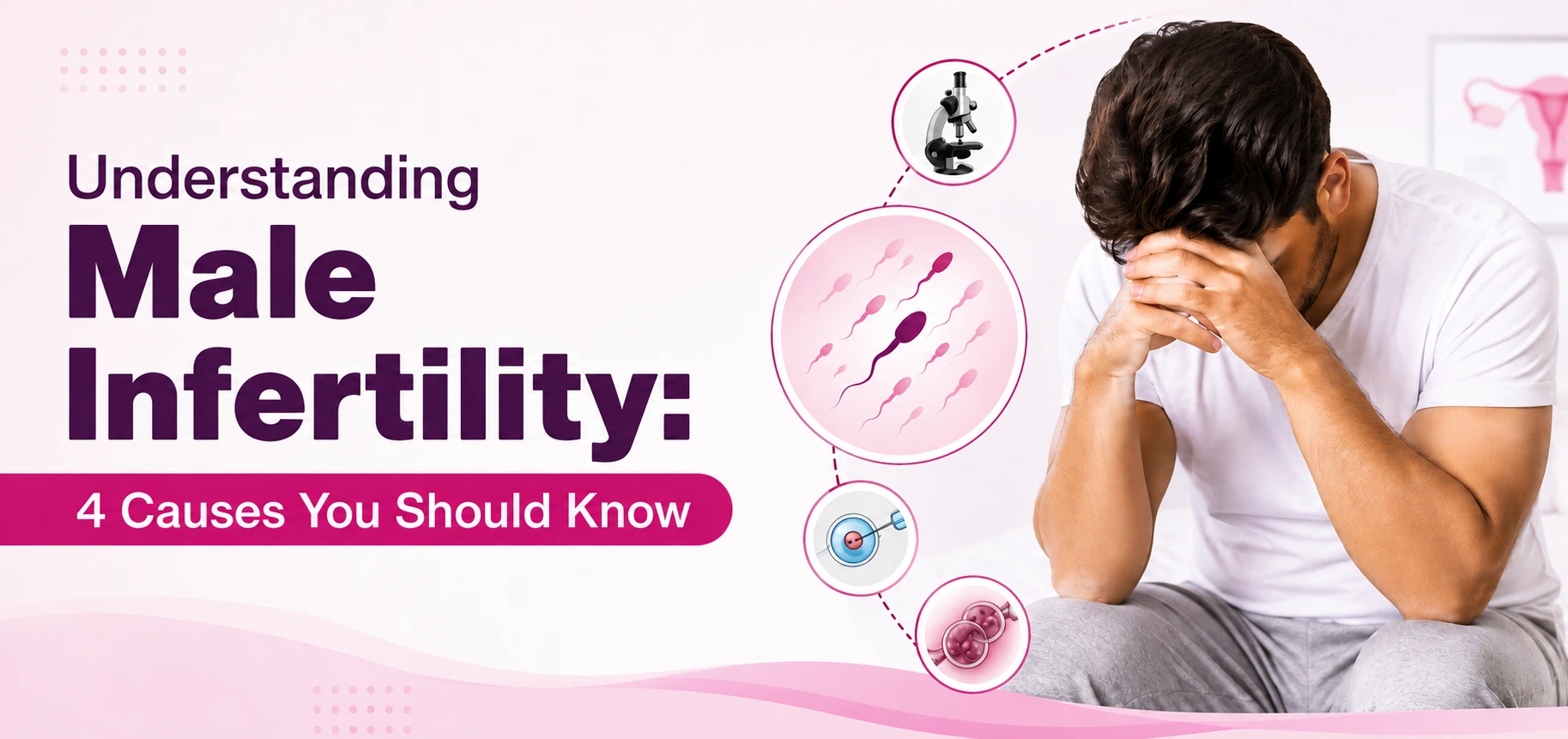
When couples struggle to conceive, the conversation often defaults to female fertility — but that's only half the picture. Male factors contribute to roughly 40-50% of all infertility cases, either alone or alongside a female factor. Understanding what actually causes male infertility is the first step toward finding the right treatment.
Why Male Infertility Gets Overlooked
Male infertility often has no obvious symptoms. A man can look and feel completely healthy while still facing fertility challenges — which is why it's frequently the last thing investigated, even though it should be one of the first. A simple semen analysis can reveal a lot, but the causes behind an abnormal result can vary widely.
Here are four of the most common causes worth understanding.
1. Low Sperm Count and Poor Sperm Quality
This is the most well-known cause, but it's more nuanced than just "count." Fertility specialists actually look at three factors together:
Sperm count — the total number of sperm present
Motility — how well sperm move (they need to swim effectively to reach and fertilize an egg)
Morphology — the shape and structure of sperm, which affects their ability to penetrate an egg
A man can have a "normal" sperm count but still face fertility issues if motility or morphology is poor. This is why a full semen analysis — not just a count — is essential for an accurate picture.
What can cause this: hormonal imbalances, infections, exposure to heat or toxins, smoking, excessive alcohol use, obesity, and certain medications.
2. Varicocele
A varicocele is an enlargement of the veins within the scrotum, similar to varicose veins elsewhere in the body. It's surprisingly common — found in about 15% of all men and up to 40% of men evaluated for infertility.
Why it affects fertility: Varicoceles can raise the temperature in the testicles, which interferes with sperm production and quality. Many men have no symptoms at all, though some notice mild discomfort or a visible swelling.
The good news: Varicoceles are often treatable through a relatively minor surgical procedure (varicocelectomy), which can improve sperm parameters in many cases — though not every man will see the same degree of improvement, so it's worth discussing realistic expectations with a specialist.
3. Hormonal Imbalances
Sperm production depends on a delicate balance of hormones — primarily testosterone, but also follicle-stimulating hormone (FSH) and luteinizing hormone (LH), which signal the testicles to produce sperm. When this hormonal signaling is disrupted, sperm production can drop significantly.
Common causes of hormonal imbalance include:
- Pituitary gland disorders
- Thyroid issues
- Obesity (fat tissue can affect hormone levels)
- Chronic stress
- Certain medications, including some steroids and long-term opioid use
Hormonal causes are often identified through blood tests measuring testosterone, FSH, LH, and prolactin levels — and many are treatable once correctly diagnosed.
4. Blockages in the Reproductive Tract
Even when sperm production is completely normal, a physical blockage anywhere along the reproductive tract can prevent sperm from being present in the ejaculate at all — a condition called obstructive azoospermia.
Blockages can occur due to:
- Congenital absence of the vas deferens (sometimes linked to genetic conditions like cystic fibrosis carriers)
- Prior infections (including untreated STIs)
- Scarring from previous surgery, such as a hernia repair
- Vasectomy (in men seeking reversal)
How it's diagnosed: A semen analysis showing zero sperm count, combined with normal hormone levels, often points toward an obstructive cause rather than a production issue — an important distinction, since treatment approaches differ significantly. In many cases, sperm can still be surgically retrieved directly from the testicle for use in IVF/ICSI, even when natural conception isn't possible.
What This Means for You
If you and your partner have been trying to conceive without success, male fertility testing should be part of the conversation from the start — not an afterthought. A semen analysis is simple, non-invasive, and can quickly indicate whether further investigation is needed.
The most important thing to understand is this: most causes of male infertility are identifiable, and many are treatable. Whether it's a lifestyle adjustment, a minor surgical fix, hormone therapy, or assisted reproductive techniques like IUI, IVF, or ICSI, there's usually a path forward once the underlying cause is clear.
Don't Wait to Get Answers
Male infertility is common, and it's not a reflection of anything other than a medical factor that can often be addressed. The sooner it's investigated, the more options are typically available.
Take the first step today. Book a consultation with our fertility specialists to get a clear picture of your fertility health — and a plan built around your specific situation