Book your Online Consultation
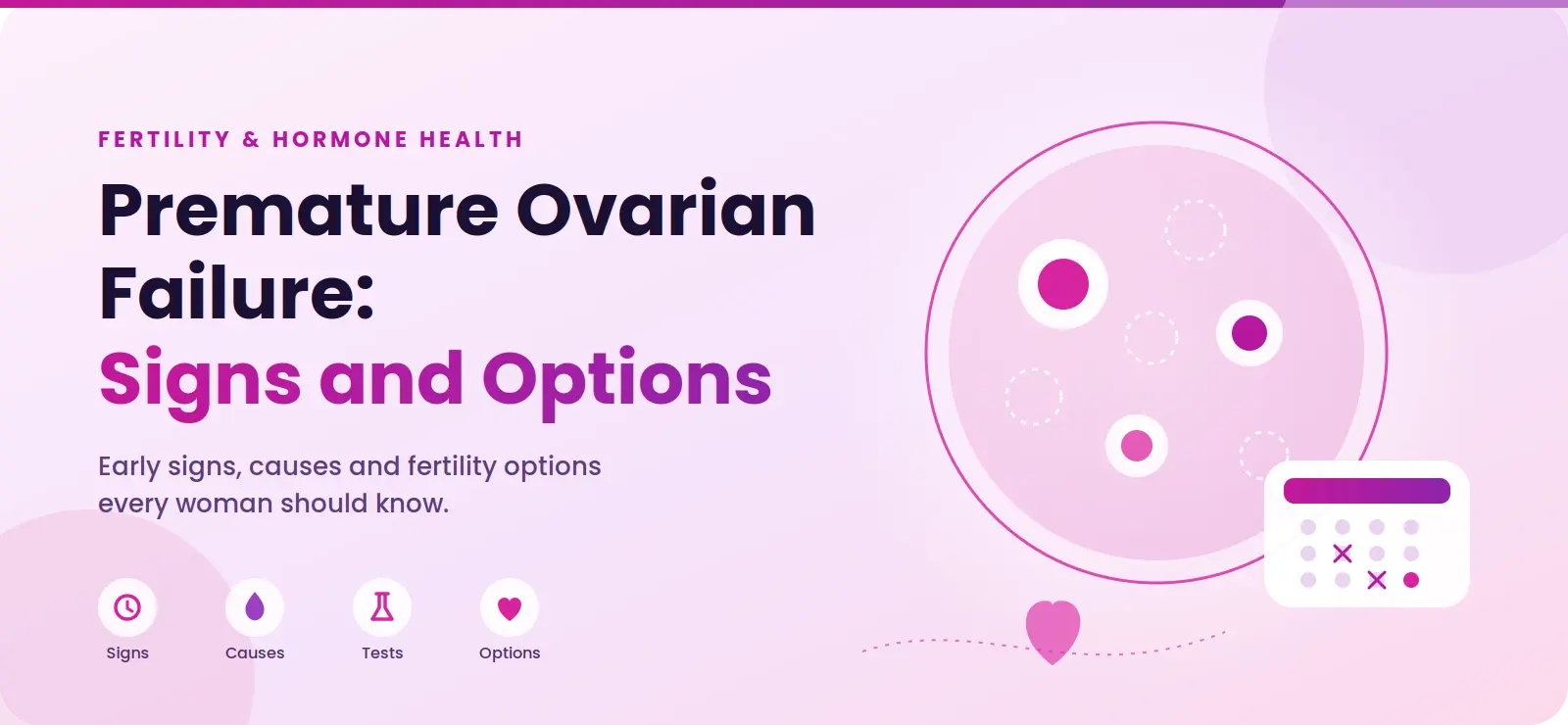
Missed periods, hot flashes and trouble conceiving are easy to put down to stress or a busy life. But when they appear before the age of 40, they can be signs of premature ovarian failure, also called premature ovarian insufficiency (POI).
Hearing this diagnosis can feel overwhelming, especially for women who hoped to have children. The good news is that it can be diagnosed with simple tests, its symptoms can be managed, and there are real options for protecting your health and building a family.
This guide explains what premature ovarian failure is, its signs and causes, how it is diagnosed, and what your options are.
What Is Premature Ovarian Failure?
Premature ovarian failure (POF) happens when the ovaries stop working normally before the age of 40. The ovaries may release eggs only occasionally, or stop releasing them altogether, and they make less of the hormones oestrogen and progesterone.
Many doctors now prefer the term premature ovarian insufficiency (POI), because the ovaries do not always stop completely. Some women still have occasional periods and, rarely, may even ovulate. Both terms describe the same condition.
Is it the same as menopause? Not exactly. Menopause is a natural change that usually happens around the late 40s to early 50s, and the ovaries have permanently stopped. In POI, the ovarian function is lost much earlier, and it can be unpredictable.
Signs and Symptoms of Premature Ovarian Failure
Symptoms are similar to those of menopause, but they appear much earlier. Common signs include:
- Irregular or missed periods, or periods that stop for several months
- Hot flashes and night sweats
- Vaginal dryness and discomfort during intimacy
- Mood changes, irritability, anxiety or low mood
- Poor sleep and tiredness
- Low interest in intimacy
- Difficulty getting pregnant
- Trouble concentrating or "brain fog"
Some women have no obvious symptoms, and the first clue is simply that they are not conceiving.
When to see a doctor: If your periods have been irregular or absent for three months or more, and you are not pregnant, or if you have hot flashes or fertility concerns before 40, consult a gynaecologist or fertility specialist.
What Causes Premature Ovarian Failure?
In many women, no clear cause is found. When a cause is identified, it may include:
- Genetic conditions: such as Turner syndrome or the Fragile X premutation
- Autoimmune conditions: where the body's immune system affects the ovaries, sometimes along with thyroid or adrenal conditions
- Cancer treatment: chemotherapy and radiation can damage the ovaries
- Ovarian surgery: removal of one or both ovaries, or surgery that reduces ovarian tissue
- Certain infections: rarely, some infections can affect the ovaries
- Family history: early menopause in a mother or sister may raise the chance
Smoking and some environmental exposures may also affect ovarian health, but they are not considered a complete explanation on their own.
How Is It Diagnosed?
Diagnosis usually involves a discussion of your symptoms and history, along with a few tests:
- FSH (follicle-stimulating hormone): a persistently high level, confirmed on repeat testing, is a key sign
- Oestradiol: often low in POI
- AMH (anti-Müllerian hormone): usually low, showing a reduced egg reserve
- Pelvic ultrasound: to look at the ovaries and the number of small follicles
- Other tests: thyroid tests, a pregnancy test, and sometimes genetic or autoimmune tests to find the cause
Your doctor will usually repeat hormone tests after a few weeks before confirming the diagnosis. Please do not interpret reports on your own, because levels can vary and must be read alongside your symptoms.
Fertility Options with Premature Ovarian Failure
Many women with POI worry that motherhood is no longer possible. The answer depends on your situation, so speak to a fertility specialist early. Options may include:
- Natural conception: a small number of women with POI still ovulate occasionally and may conceive, but this cannot be predicted
- Donor egg IVF: using eggs from a donor, which is often the most effective treatment for women with POI
- Embryo adoption or adoption: other paths to parenthood
- Fertility preservation: if you are about to start treatment that may harm the ovaries, such as chemotherapy, ask about freezing eggs or embryos beforehand
- Emerging treatments: options such as PRP ovarian rejuvenation are still being studied, and their results are not proven, so discuss them honestly with your doctor
Every woman's journey is different, and a specialist can help you choose a path that suits your health, values and timeline.