Book your Online Consultation

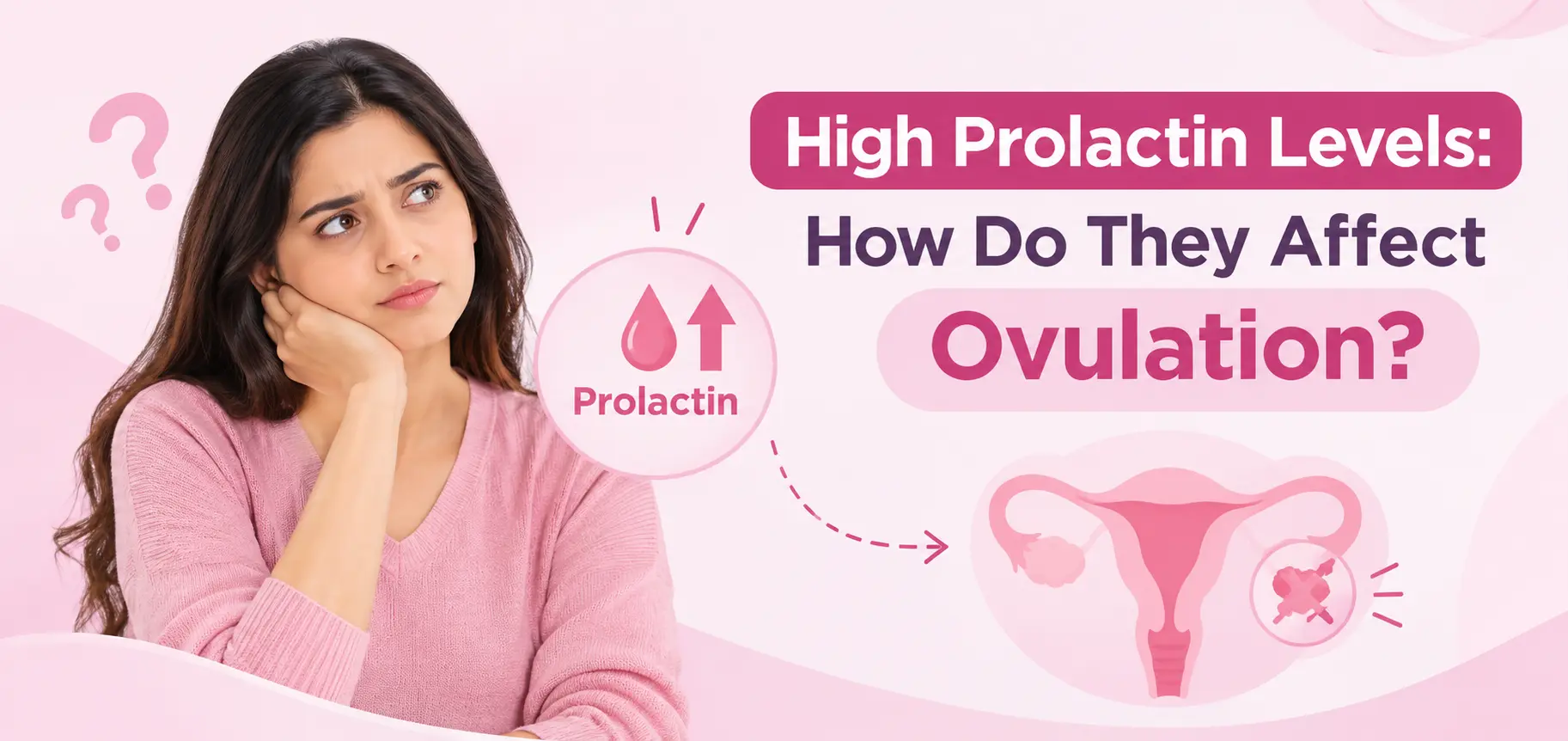
Hormones play an important role in regulating a woman's menstrual cycle, ovulation and reproductive health. Even a small imbalance in certain hormones can sometimes affect the ability to conceive. One such hormone is prolactin.
Prolactin is primarily responsible for stimulating breast milk production after childbirth. However, when prolactin levels become higher than normal in women who are not pregnant or breastfeeding, it can interfere with the hormones responsible for ovulation.
But how exactly do high prolactin levels affect ovulation? Can they cause irregular periods or infertility? Understanding the connection can help women identify potential fertility concerns and seek appropriate medical guidance.
What Is Prolactin?
Prolactin is a hormone produced by the pituitary gland, a small gland located at the base of the brain. Its primary function is to support breast development and milk production during and after pregnancy.
Prolactin levels naturally increase during pregnancy and breastfeeding. However, elevated levels outside these situations may indicate a condition known as hyperprolactinemia.
High prolactin levels can interfere with the normal hormonal signals between the brain and ovaries, potentially affecting menstrual cycles and ovulation.
What Causes High Prolactin Levels in Women?
Several factors can contribute to increased prolactin levels. Some common causes include:
- Prolactinoma: A usually non-cancerous tumour in the pituitary gland that produces excess prolactin.
- Thyroid disorders: An underactive thyroid (hypothyroidism) can increase prolactin levels.
- Certain medications: Some antidepressants, antipsychotics and other medicines may increase prolactin.
- Stress: Physical stress, emotional stress and certain short-term conditions can temporarily influence prolactin levels.
- Kidney or liver disorders: Certain medical conditions can affect how the body regulates prolactin.
- Chest wall irritation: Injuries or conditions affecting the chest wall may sometimes contribute to elevated levels.
Identifying the underlying cause is important before deciding on the appropriate treatment.
How Do High Prolactin Levels Affect Ovulation?
Ovulation is the process in which a mature egg is released from the ovary during the menstrual cycle. It is regulated by hormones such as follicle-stimulating hormone (FSH) and luteinising hormone (LH).
When prolactin levels become excessively high, they can suppress the release of gonadotropin-releasing hormone (GnRH) from the hypothalamus. This can disrupt the normal release of FSH and LH, which are essential for follicle development and ovulation.
As a result, women may experience:
- Irregular menstrual cycles
- Infrequent or absent ovulation
- Difficulty predicting fertile days
- Reduced chances of natural conception
- In some cases, complete absence of menstrual periods
The severity of these effects depends on how high prolactin levels are and the underlying cause.
Common Signs and Symptoms of High Prolactin Levels
Not every woman with elevated prolactin experiences noticeable symptoms. However, some common signs include:
- Irregular periods: Menstrual cycles may become unpredictable or stop completely.
- Unexpected breast milk production: Milky nipple discharge may occur even when a woman is not pregnant or breastfeeding.
- Difficulty conceiving: Disrupted ovulation can make natural conception more challenging.
- Reduced sexual desire: Hormonal changes may affect libido.
- Vaginal dryness: Lower oestrogen levels associated with suppressed ovarian function may cause vaginal dryness.
- Headaches or vision changes: These symptoms may occur when a pituitary tumour affects surrounding structures.
Persistent headaches or changes in peripheral vision should be evaluated promptly by a healthcare professional.
Can High Prolactin Levels Cause Infertility?
High prolactin levels can contribute to female infertility, particularly when they interfere with regular ovulation.
When ovulation does not occur consistently, the chances of an egg being available for fertilisation become reduced. Some women may also experience changes in reproductive hormone levels that affect their menstrual cycle.
However, high prolactin does not necessarily mean permanent infertility. In many cases, identifying and treating the underlying cause can help restore normal prolactin levels and improve ovulatory function.
The possibility of conception depends on individual reproductive health and other fertility factors.
Can You Get Pregnant After Treating High Prolactin?
Yes. Many women with hyperprolactinemia can conceive after appropriate treatment
When prolactin levels return to a healthier range, normal hormonal signalling and ovulation may resume. This can improve the chances of natural conception in women whose fertility difficulties are primarily related to elevated prolactin.
However, pregnancy outcomes also depend on factors such as age, ovarian reserve, fallopian tube health and sperm quality.
Women who continue to experience difficulty conceiving may benefit from a comprehensive fertility evaluation to identify other possible causes.
When Should You Consult a Fertility Specialist?
Consider seeking medical advice if you experience:
- Repeatedly irregular or missed periods
- Milky nipple discharge without pregnancy or breastfeeding
- Difficulty conceiving despite regular attempts
- Persistent headaches or vision changes
- Previously diagnosed high prolactin levels
Early evaluation can help identify hormonal imbalances and guide appropriate treatment.
Conclusion
High prolactin levels can interfere with the hormonal signals responsible for ovulation, leading to irregular periods and difficulty conceiving. However, this condition is often manageable when the underlying cause is identified.
If you are experiencing menstrual irregularities or fertility challenges, consulting an experienced fertility specialist can help you understand your hormone levels and explore suitable treatment options.