Book your Online Consultation
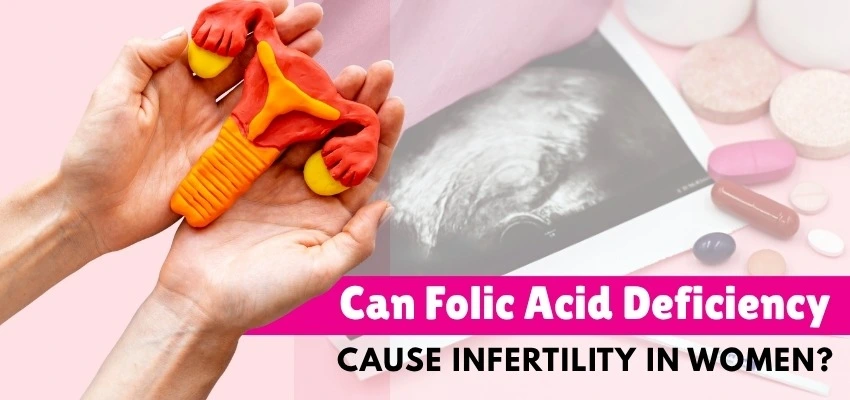
When most people hear the word folic acid, they immediately think of pregnancy. Doctors routinely recommend folic acid supplements once a woman becomes pregnant, and most prenatal vitamins contain it as a key ingredient. But here is what most women do not know — folic acid plays a critical role not just during pregnancy, but in the weeks and months before conception even happens.
Folic acid deficiency is far more common than most women realise, and its impact on fertility is something that often goes undetected until a couple has already been struggling to conceive for months or even years. If you have been trying to get pregnant without success and nobody has checked your folic acid levels yet, this blog is something you need to read carefully.
What is Folic Acid and Why Does Your Body Need It?
Folic acid is the synthetic form of folate, which is a B vitamin — specifically Vitamin B9. It is found naturally in foods like leafy green vegetables, legumes, citrus fruits, and fortified cereals. Folate is essential for DNA synthesis, cell division, red blood cell production, and the proper development of new cells in the body.
In simple terms, folic acid is what your body uses to build and repair genetic material. Every time a cell divides and multiplies — which happens constantly in your body and especially in reproductive tissue — folate is needed for that process to happen correctly. When your body does not have enough folic acid, cell production becomes faulty, and this has direct consequences for your fertility and your ability to carry a healthy pregnancy.
Can Folic Acid Deficiency Cause Infertility in Women?
The direct and honest answer is — yes, folic acid deficiency can contribute significantly to female infertility. Here is exactly how it affects your reproductive health at every stage.
1. Folic Acid and Egg Quality
The quality of your eggs is one of the most critical factors in your ability to conceive. Egg development — a process called oogenesis — requires rapid and accurate DNA replication. Folic acid is directly involved in this process. Without adequate folate, DNA replication in the developing egg becomes error-prone, leading to chromosomally abnormal eggs.
Chromosomally abnormal eggs either fail to fertilise, fail to implant in the uterus, or result in early miscarriage even before the woman knows she was pregnant. Poor egg quality is one of the leading causes of unexplained infertility, and folic acid deficiency is one of the most treatable contributors to it.
Studies have shown that women with higher folate levels have better egg quality, higher rates of successful fertilisation, and stronger early embryo development compared to women with low folate levels.
2. Folic Acid and Ovulation
Folic acid plays a role in regulating the hormonal environment needed for regular ovulation. Folate is involved in the metabolism of homocysteine — an amino acid that, when elevated, disrupts hormonal signalling and interferes with normal ovulatory function.
Women with folic acid deficiency often have elevated homocysteine levels, which has been directly linked to anovulation — the absence of ovulation — and irregular menstrual cycles. If you are experiencing irregular periods or have been told you are not ovulating regularly, checking your folate and homocysteine levels is an important step that your doctor should not skip.
Research has also shown that women who take folic acid supplements before conception have a significantly higher rate of ovulation compared to women who do not, suggesting that adequate folate actively supports the ovulatory process.
3. Folic Acid and Recurrent Miscarriage
One of the most heartbreaking consequences of folic acid deficiency is recurrent miscarriage — losing a pregnancy repeatedly before 20 weeks. Many couples who experience recurrent miscarriage undergo extensive testing only to receive an unexplained diagnosis, when in reality low folate or MTHFR-related folate metabolism problems could be playing a significant role.
Folic acid deficiency affects the early development of the embryo at the neural tube stage, which occurs within the first 28 days of pregnancy — often before a woman even knows she is pregnant. Neural tube defects caused by folate deficiency are a well-established cause of early pregnancy loss. Beyond neural tube issues, elevated homocysteine from folate deficiency also increases the risk of blood clotting in the placental blood vessels, which can cut off the embryo's nutrient supply and result in miscarriage.
This is exactly why doctors recommend starting folic acid supplementation at least one to three months before trying to conceive — so that adequate levels are built up in the body before the critical early weeks of embryo development begin.
4. Folic Acid and IVF Success
For women undergoing assisted reproduction, folic acid levels matter enormously. Research has consistently shown that women with higher folate levels going into IVF treatment have better outcomes — more eggs retrieved, better quality embryos, higher fertilisation rates, better implantation rates, and lower miscarriage rates after embryo transfer.
Fertility specialists increasingly check folate levels as part of the pre-IVF workup, and many fertility clinics now recommend active folate — methylfolate — rather than standard folic acid for women with suspected MTHFR mutations or poor folate metabolism.
If you are planning to undergo IVF and have not had your folate levels checked, it is important to raise this with your fertility specialist before treatment begins.
Signs That You May Have a Folic Acid Deficiency
Many women with folic acid deficiency have no obvious symptoms, which is why it often goes undiagnosed. However, some signs that may indicate low folate levels include:
- Persistent fatigue and weakness
- Pale skin or anaemia-like symptoms
- Mouth sores or a sore tongue
- Irregular or absent periods
- History of recurrent miscarriage
- Difficulty conceiving despite regular unprotected intercourse
- Elevated homocysteine levels on blood tests
If you experience any of these and are trying to conceive, a simple blood test to check with your fertility specialist for serum folate and homocysteine levels is a sensible first step.
When Should You See a Doctor?
If you have been trying to conceive for more than 6 months without success, or if you have experienced recurrent miscarriages, you should not wait any longer before consulting a fertility specialist. A complete fertility workup should include checking your folate and B12 levels, homocysteine, thyroid function, hormonal profile, and ovarian reserve — all of which can be assessed through blood tests.
Folic acid deficiency is one of the most easily correctable nutritional causes of infertility, and addressing it promptly can make a significant difference to your chances of conceiving both naturally and through assisted reproduction.
Conclusion
Folic acid is not just a pregnancy vitamin — it is a fertility vitamin. Its role in egg quality, ovulation, implantation, embryo development, and miscarriage prevention makes it one of the most important nutrients for any woman who is planning to start a family. The good news is that folic acid deficiency is completely diagnosable and highly treatable. A simple blood test, the right supplementation, and dietary changes can correct the deficiency and meaningfully improve your fertility outcomes.