Book your Online Consultation
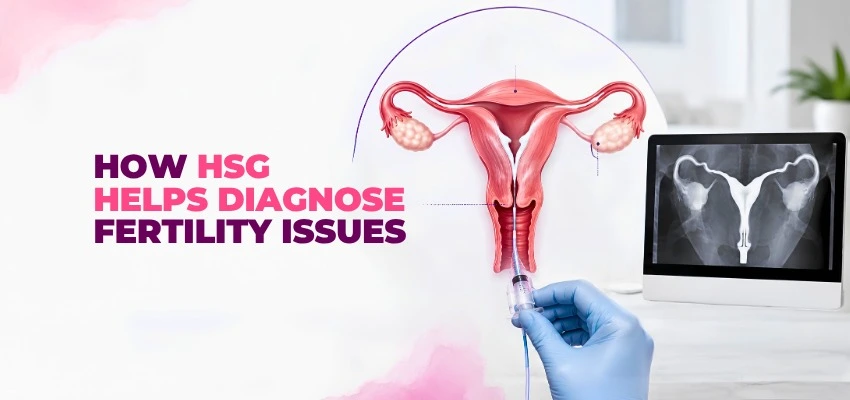
For many couples trying to conceive, understanding the root cause of fertility challenges is the first step toward successful treatment. Female infertility can result from various factors, including blocked fallopian tubes, uterine abnormalities, hormonal imbalances, or ovulation disorders. Among the diagnostic tools available, the Hysterosalpingography (HSG) test plays a crucial role in identifying structural issues that may affect fertility.
This article explains how an HSG test works, why fertility specialists recommend it, and how it helps diagnose common fertility issues.
What Is an HSG Test?
A Hysterosalpingography (HSG) is a specialized X-ray procedure used to examine a woman's uterus and fallopian tubes. During the test, a contrast dye is injected through the cervix into the uterus. As the dye flows through the reproductive tract, X-ray images capture its movement, helping doctors identify abnormalities that may interfere with conception.
The HSG test is commonly recommended as part of a comprehensive fertility evaluation, particularly for women who have been unable to conceive after several months of trying.
Why Is HSG Important in Fertility Assessment?
Successful pregnancy depends on several factors, including:
- Healthy ovulation
- Open and functional fallopian tubes
- A normal uterine cavity
- Healthy sperm
Even if ovulation occurs regularly, blocked fallopian tubes or uterine abnormalities can prevent fertilization or implantation. The HSG test helps fertility specialists assess these structural factors and determine whether they may be contributing to infertility.
How HSG Helps Diagnose Fertility Issues
1. Detects Blocked Fallopian Tubes
One of the primary reasons doctors recommend an HSG test is to check whether the fallopian tubes are open.
The fallopian tubes serve as the pathway where sperm meets the egg. If one or both tubes are blocked, fertilization may not occur naturally.
An HSG can identify:
- Partial tube blockage
- Complete tube blockage
- Damage caused by infection
- Scarring from previous surgeries
- Tubal abnormalities caused by endometriosis
When the contrast dye fails to pass through a tube, it often indicates a blockage that may require further treatment or assisted reproductive techniques such as IVF.
2. Evaluates the Shape and Structure of the Uterus
The HSG test provides valuable information about the uterine cavity. Certain structural abnormalities can affect implantation and increase the risk of miscarriage.
Conditions that may be detected include:
- Uterine septum
- Congenital uterine abnormalities
- Uterine adhesions (scar tissue)
- Polyps
- Fibroids affecting the uterine cavity
Identifying these issues early allows fertility specialists to recommend appropriate treatment options that may improve pregnancy outcomes.
3. Identifies Scar Tissue and Adhesions
Scar tissue within the uterus or fallopian tubes can develop due to:
- Previous surgeries
- Pelvic infections
- Endometriosis
- Complications from pregnancy or miscarriage
These adhesions can interfere with sperm movement, egg transport, or embryo implantation. An HSG test helps reveal areas where scar tissue may be restricting normal reproductive function.
4. Assesses Tubal Functionality
Beyond detecting blockages, the HSG test evaluates how well the fallopian tubes allow fluid to pass through. This information helps fertility specialists understand whether the tubes are functioning properly and whether natural conception remains a viable option.
5. Supports Fertility Treatment Planning
The results of an HSG test help fertility specialists develop personalized treatment plans.
Depending on the findings, recommended treatments may include:
- Ovulation induction
- Surgical correction of uterine abnormalities
- Tubal surgery
- Intrauterine insemination (IUI)
- In vitro fertilization (IVF)
Accurate diagnosis allows healthcare providers to select the most effective fertility treatment pathway.
Does an HSG Test Improve Fertility?
Interestingly, some women experience improved fertility after an HSG test.
As the contrast dye passes through the fallopian tubes, it may help flush out minor mucus plugs or debris that could be partially obstructing the tubes. While the HSG test is primarily diagnostic, some studies suggest a temporary increase in pregnancy rates following the procedure.
However, the extent of this benefit varies among individuals and should not be considered a fertility treatment on its own.
Benefits of an HSG Test
The HSG test offers several advantages:
- Minimally invasive
- Quick outpatient procedure
- Provides detailed images of reproductive anatomy
- Helps identify fertility barriers
- Guides treatment planning
- Can potentially improve fertility in some cases
When Should You Consider an HSG Test?
A fertility specialist may recommend an HSG test if:
- You have been trying to conceive for 12 months or longer
- You are over 35 and have not conceived after 6 months
- You have experienced recurrent miscarriages
- You have a history of pelvic inflammatory disease
- You have undergone pelvic surgery
- There is suspicion of tubal blockage or uterine abnormalities
Conclusion
The HSG test is one of the most valuable diagnostic tools in fertility evaluation. By examining the uterus and fallopian tubes, it helps identify structural issues that may prevent conception or increase the risk of pregnancy complications. From detecting blocked fallopian tubes to revealing uterine abnormalities, the information gained through an HSG can significantly influence fertility treatment decisions.
If you are struggling to conceive, discussing an HSG test with your fertility specialist may provide important insights and help determine the most effective path toward achieving pregnancy.